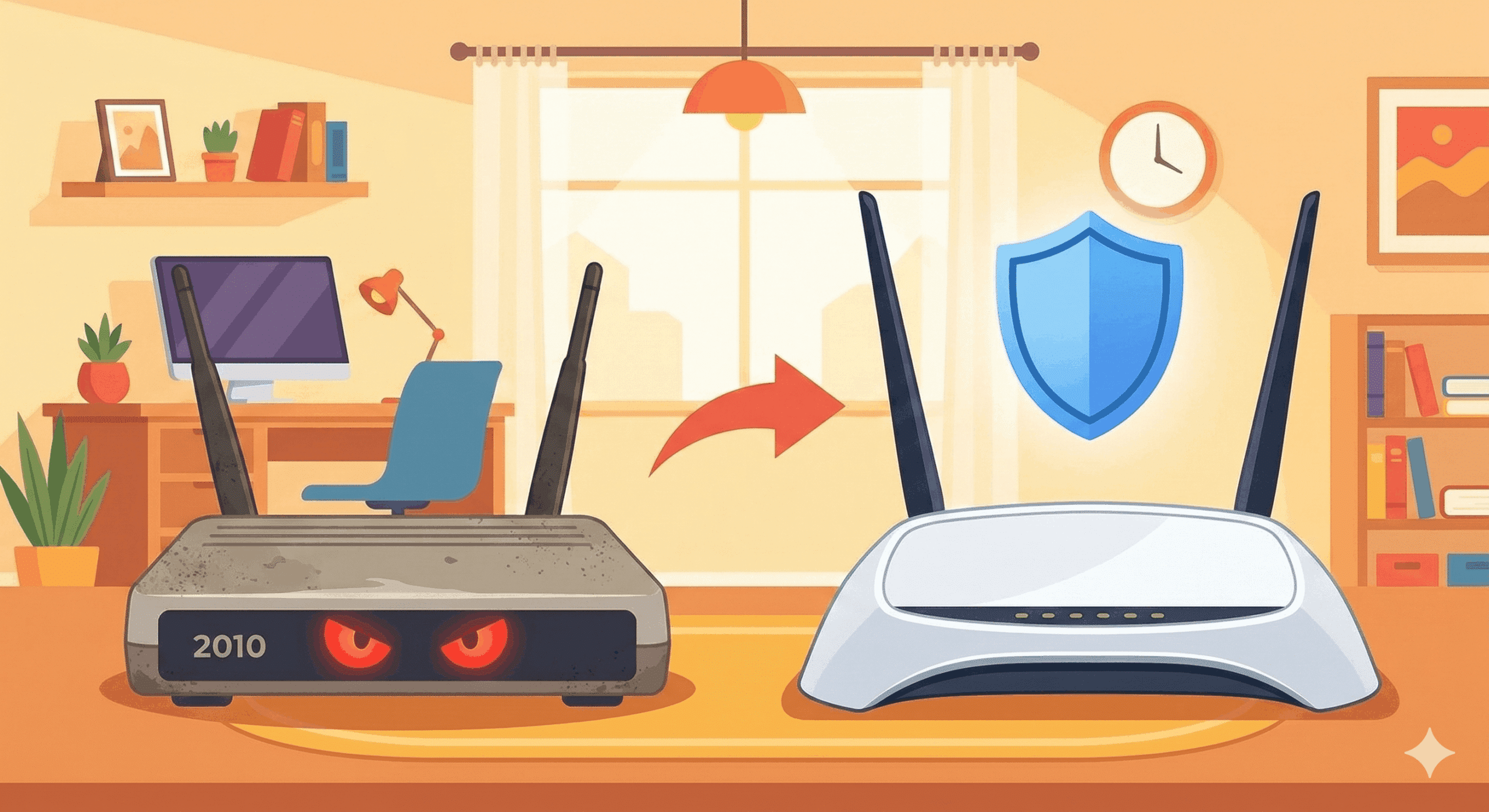
For our latest Polk Tech Advocates update, we’re looking at a recent warning from the FBI regarding a common piece of technology in almost every home: the internet router. Specifically, the government is warning about “End-of-Life” (EOL) routers and how they are becoming a favorite target for cybercriminals.
Is Your Router Too Old for Its Own Good?
Most of us set up our internet routers, tuck them away in a corner, and forget about them as long as the Wi-Fi is working. However, technology companies eventually stop supporting older models. When a router hits its “End-of-Life” date, the manufacturer no longer sends out security updates or “patches” to fix newly discovered holes in its armor.
According to the FBI, hackers are searching for these older, unprotected routers—specifically models from 2010 or earlier—to install a type of “cloaking” software.
Why Should You Care?
When a hacker takes over an old router, they don’t necessarily want your personal files. Instead, they want to use your router as a “Proxy.” Think of this like a getaway car. By routing their illegal activities through your home’s internet connection, the criminals can hide their true location and identity, making it look like the “bad stuff” is coming from your house.
How to Stay Safe
The Polk Tech Advocates recommend these simple steps to keep your home network secure:
- Check the Age: If your router is more than 10 years old, it’s time for an upgrade. New routers are faster, more reliable, and—most importantly—receive regular security updates.
- Update Your Software: For those with newer models, log in to your router’s settings occasionally to make sure the “firmware” (the internal software) is up to date.
- Strong Passwords: Ensure your Wi-Fi and your router’s admin page use a unique, strong password.
- Turn Off Remote Management: Unless you specifically need to access your home internet settings while you are away at the grocery store, disable the “Remote Administration” feature in your settings. This closes a major door that hackers use to get in.
Staying safe doesn’t require being a tech genius—it just takes a little bit of digital housekeeping!
Leave a Reply