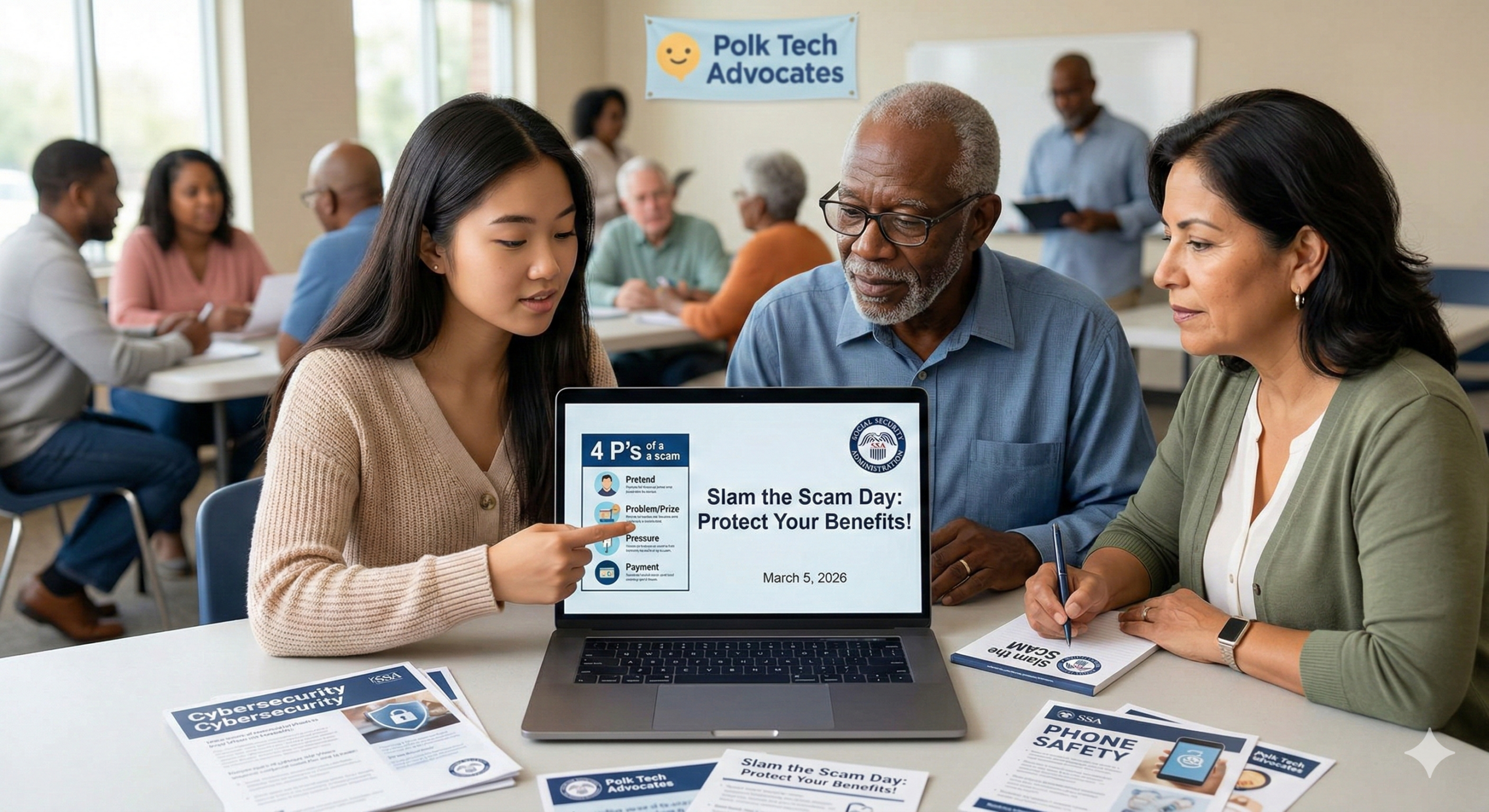
As technology evolves, so do the tactics of those trying to exploit it. At Polk Tech Advocates, we believe that staying informed is the first line of defense. With National Slam the Scam Day approaching on March 5, 2026, it is the perfect time to pull back the curtain on the latest tactics being used by Social Security scammers.
The New Digital Playbook
Scammers are no longer just making “robocalls.” Today, they are leveraging AI voice cloning and sophisticated digital forgery to create documents that look—and sound—remarkably official. However, no matter how high-tech the delivery, the strategy behind the scam almost always follows the same “4 P’s”:
- Pretend: They pose as a trusted source, such as a Social Security Administration (SSA) employee or a law enforcement officer.
- Problem or Prize: They’ll claim there is a “problem” (like a suspended SSN) or a “prize” (like a surprise cost-of-living adjustment).
- Pressure: They create a false sense of urgency, insisting you act immediately to avoid arrest or account seizure.
- Payment: They demand payment through non-traditional methods like gift cards, cryptocurrency, or wire transfers.
Tech Check: What the SSA Will NEVER Do
To protect yourself and your community, remember these digital “red lines.” The real SSA will never:
- Threaten you with arrest or legal action over the phone.
- Suspend your Social Security number (this simply isn’t a thing).
- Demand immediate payment via cryptocurrency, gift cards, or mailing cash.
- Message you privately on social media platforms.
How to Take Action
If you receive a suspicious communication, the most powerful tool you have is the “Hang Up” or “Delete” button. Don’t engage, and definitely don’t click on any links in unexpected emails or texts.
If you are worried about the status of your benefits, skip the links in your inbox and go straight to the official source: SSA.gov.
Resource Links for Advocates
We encourage everyone in the Polk Tech community to bookmark these official resources:
- Report Fraud: Use the SSA OIG Reporting Tool to flag scammers.
- Identity Protection: If you think your data has been compromised, head to IdentityTheft.gov.
- General Scams: For non-SSA fraud, visit ReportFraud.ftc.gov.
By staying alert and sharing this information, we can make our community a harder target for scammers. Join the conversation online using #SlamTheScam and let’s keep our neighbors tech-safe!
Leave a Reply